As an Amazon Associate, we earn from qualifying purchases. Some links on this site are affiliate links at no extra cost to you. Our recommendations are based on thorough research and editorial judgment.

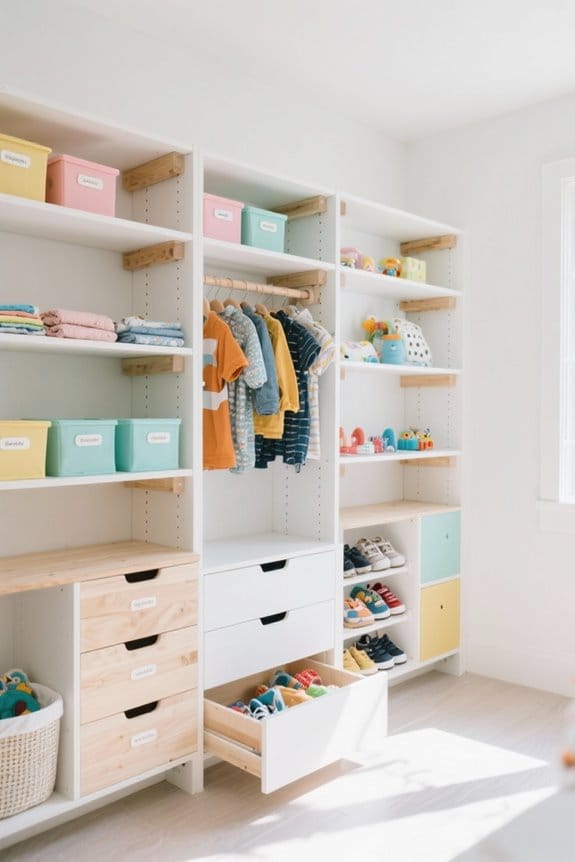
Kids’ Closet Organization: Systems That Grow With Them

Creating a kid’s closet that grows with them is easier than you think! First, try adjustable hanging solutions. These allow easy self-dressing and adapt as your child grows—no more wardrobe malfunctions! Next, modular storage components can make organization fun. Think interchangeable shelves, colorful bins, and labels—suddenly, sorting becomes a game! Engage kids by letting them choose outfits and sort toys. For some clever space-saving hacks, like using hooks and baskets, keep reading—more tips are just around the corner!
Key Takeaways
- Implement adjustable hanging solutions that adapt to children’s growth for easy self-dressing and prolonged usability.
- Utilize multi-functional storage components to reduce clutter and provide customizable organization for unique closet spaces.
- Engage kids in the organization process by involving them in sorting and creating zones for clothes, toys, and accessories.
- Regularly reassess and maintain the closet setup, using adjustable shelves and designated spots for flexible organization as children’s needs change.
- Incorporate budget-friendly storage ideas like bins, labels, and the back of closet doors to maximize space and enhance functionality.
The Importance of Adjustable Hanging Solutions
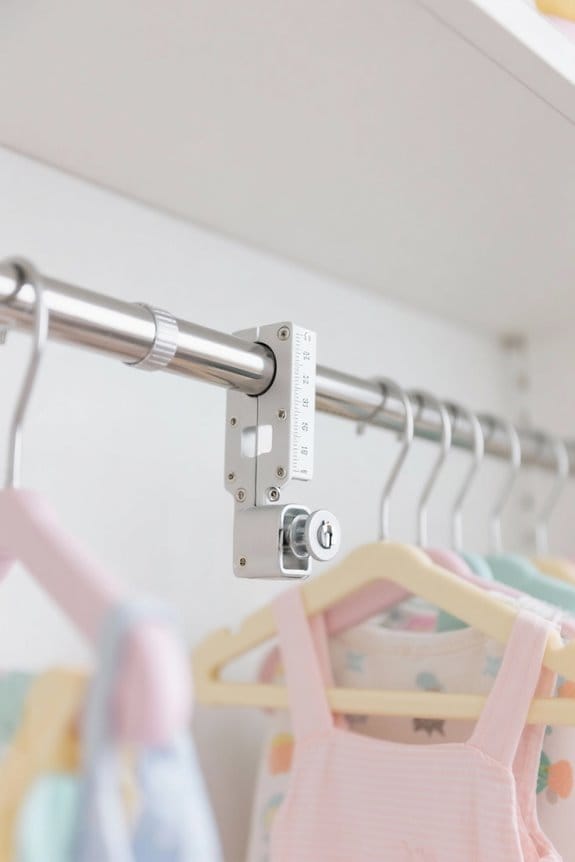
When it comes to organizing kids’ closets, adjustable hanging solutions are nothing short of amazing—especially since kids seem to grow taller overnight! These systems truly shine because they adapt with each growth spurt. With adjustable heights, parents can easily reposition rods to accommodate all those lovely new clothes.
Key features include:
- Child accessibility for easy self-dressing.
- Adaptable designs that suit varied garment lengths.
- Multi-functionality that reduces clutter and promotes organizational skills.
Investing in these solutions offers long-term usability and decreases the need for frequent replacements. They not only maximize closet space, but also help kids develop habits around organization—because let’s face it, we could all use a little less chaos in our lives! Just like adjustable dividers in kitchen organizers that accommodate various sizes, flexible closet systems can grow alongside your child’s changing wardrobe needs.
Creating Modular Storage Components
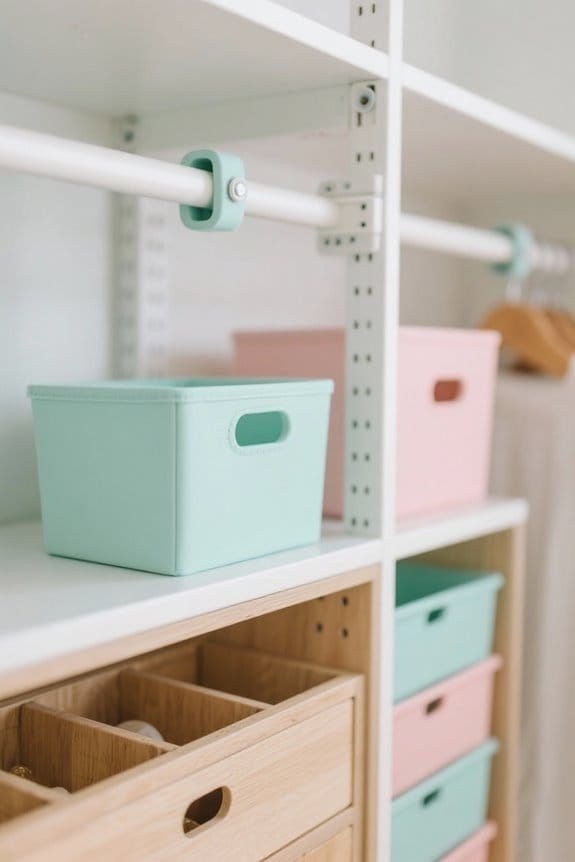
Creating modular storage components can transform a child’s closet from a chaotic jumble into a well-organized haven. These systems offer incredible design versatility, adapting as kids grow. With interchangeable shelves, drawers, and bins, every piece can be customized or swapped out. Need to stash toys today? No problem! Switching to school supplies later? Easy peasy!
- User-friendly assembly makes it a DIY delight—no expert needed!
- Safety is a priority, too; rounded edges and non-toxic materials keep little ones safe.
- Plus, color options can match any evolving style, from dinosaur obsession to teen chic.
Modular components grow with your child’s ever-changing needs—no closet overhaul required! Look for systems with adjustable components that facilitate customizable storage solutions, ensuring the closet can be reconfigured as your child transitions from toddler to teenager. So, get ready to embrace the organized chaos of childhood!
Innovative Space Maximization Techniques
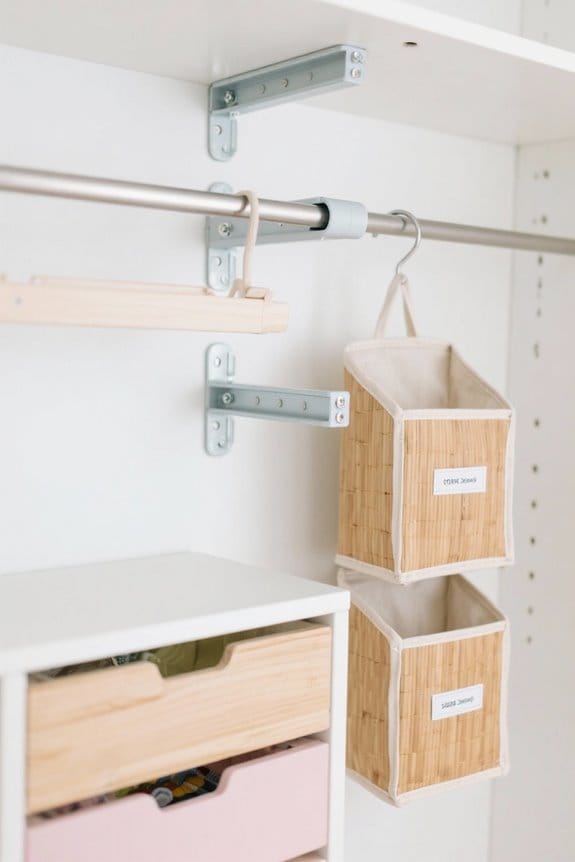
Transforming a child’s closet with modular storage components is just the beginning—maximizing every inch of that space brings the organization to a whole new level. Utilizing design creativity, parents can enhance space efficiency.
- Double hanging rods create more room for shorter clothes.
- Wall-mounted shoe shelves eliminate floor clutter.
- Hooks for bags use vertical space smartly.
Additionally, integrating a stool empowers kids to reach those tricky high shelves safely. Designate lower shelves for daily outfits; this keeps everything manageable. For those beloved toys? Baskets work wonders at the bottom, easily accessible and endlessly versatile.
Many expandable closet organizer systems feature adjustable configurations that can adapt as your child grows, offering customizable heights to accommodate everything from toddler clothing to teen accessories.
With these innovative techniques, closets can morph beyond mere storage. They become organized wonderlands that grow with children, fostering independence—without the frustration of finding the missing sock!
Recommended Products

⭐⭐⭐【We have More】 - 9 * Side Shelves + 9 * Adjustable Hanging Rods+ 9 * Wooden Drawers - More Shelves than others!

【Versatile 3-IN-1 Modular Design】Transform any space instantly with our freestanding closet system that adapts to your needs. Use as 3 standalone storage organizers or combine units to create floor-to-ceiling storage walls. Perfect for any kind of storage system in your bedroom, dressing room, entrance, living room, laundry room, toddlers room without renovation.

【Customizable 3-in-1 Modular Closet System】Create your perfect storage layout with our versatile 3-piece set. Use each 25” tower individually as a freestanding garment rack in different rooms, or combine them seamlessly into a spacious 75-inch storage wall. This modular closet system offers a renovation-free solution for organizing your bedroom, entryway, living room, or nursery, adapting to your space and needs.
Maintenance and Longevity of Organizational Systems
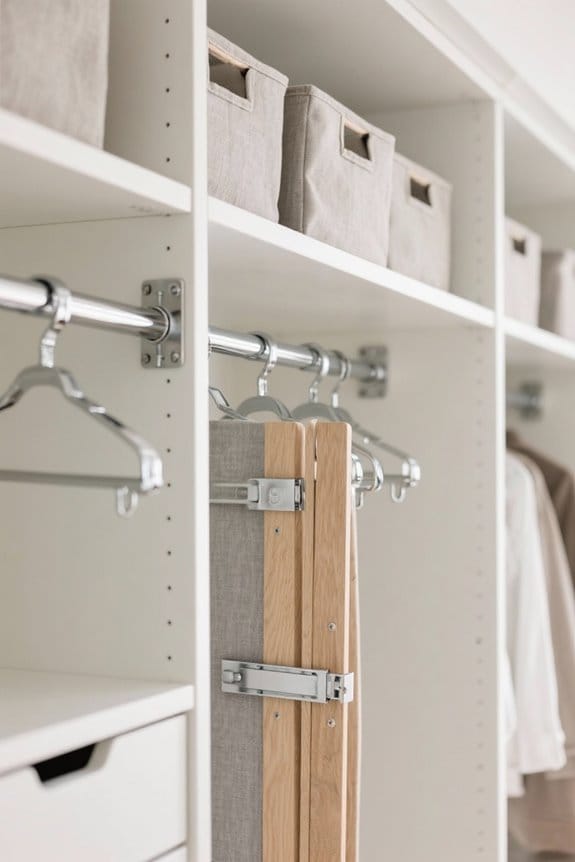
Maintaining an organized kids’ closet doesn’t have to feel like a full-time job—thank goodness! To keep order, establish regular maintenance routines. Think quarterly closet audits to purge outgrown items, which also teaches kids decision-making. The “maybe” basket can save the day—never-ending debates about clothes can be exhausting!
Encourage habit reinforcement by assigning specific spots for each clothing category. Label everything, so kids know where stuff belongs—no more hunting for missing socks!
Lastly, remember, updating the closet layout should happen annually; after all, kids grow faster than a toddler can destroy a clean living room! Investing in adjustable rods and shelves ensures your organizational system can adapt as your child’s wardrobe and storage needs evolve over the years. With these simple steps, you can maintain a closet that evolves with your child’s needs, while keeping your sanity intact.
Efficient Toy and Miscellaneous Item Storage
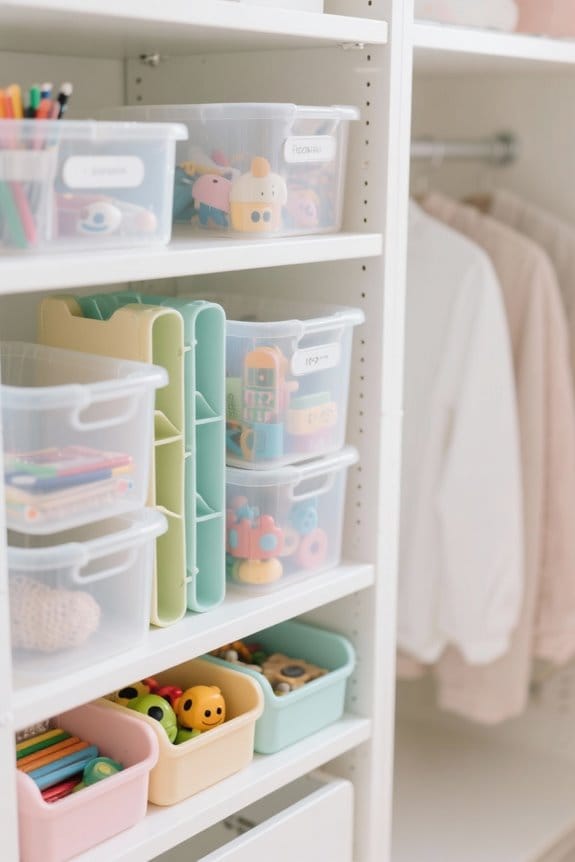
When kids’ closets are tidy, attention often turns to the toy chaos that lurks nearby. To tackle this, parents can employ toy categorization strategies. Think bins for blocks, baskets for plushies, and maybe a secret lair for action figures! Modular storage units, easily expandable, adapt to changing needs. Sustainable materials choices, like bamboo and recycled plastics, make organizing guilt-free.
Here’s some effective storage advice:
- Use multifunctional furniture for comfort and utility.
- Stackable bins utilize vertical space—how clever!
- Remember to label everything—who doesn’t love a good label?
Embrace collapsible containers for seasonal items. This helps clear clutter when toys are off-duty. For even more organization, consider storage systems with removable, machine-washable bags that simplify maintenance and keep everything fresh. Optimizing storage not only helps keep order but can save sanity—trust us, every family needs that!
Recommended Products

【Heirloom-Quality】When I was little, I used this storage box to learn how to organize. During my school years, I used it to store books and some little secrets. After getting married, I used it to sort out clothes and store potatoes and onions. One day, I looked at the belongings scattered all over the floor, I gave my son this storage box. All my best memories come back clearly to me. It is yesterday once more.

【284 GALLON LARGE CAPACITY】This VNVTO 4-tier stackable storage bin provides a generous 284-gallon (1136 QT) total capacity, with overall dimensions of 65.28" H × 29.53" L × 19.69" W. The spacious interior easily holds comforters, bedding, pillows, out-of-season clothing, holiday decorations, craft supplies, office essentials, and garage tools—keeping your home organized and clutter-free. Note: 1 lid included per set; additional lids sold separately.

Totes for Storage: Keep your home organized by storing your items in this set of stackable storage bins built with versatility in mind for a wide range of applications
Budget-Friendly and DIY Organizational Ideas
How can organizing a kid’s closet be both budget-friendly and fun? With a bit of creativity, it’s easier than you’d think! Start by using budget bins—clear plastic containers are perfect for out-of-season clothes and toys. They keep everything visible and accessible.
Add some flair with creative labels. A basic label maker—or even hand-drawn labels—helps identify what’s where, making clean-up a breeze.
Think about using the back of closet doors for extra storage. Hang baskets or shoe organizers—these can hold hats, shoes, or stuffed animals.
Finally, consider DIY options like cubby units paired with fabric bins. They’re adaptable and wash easily. Kids can arrange their space, making their closet feel like their own—how empowering! For laundry management, look for organizers with removable washable bags that simplify cleaning and make it easy for kids to transport their clothes.
Recommended Products

78.5 x 58.8 x 40.5 cm / 150 litres, 7215.

Colour: transparent

DURABLE STORAGE TOTES: The Akro-Mils 12 Gallon KeepBox is made from industrial-grade plastic; These storage bins withstand heavy use and the textured bottom ensures a no-slip grip, preventing unwanted movement during storage or transport
Planning for Growing Wardrobes
Evolving wardrobes need practical planning, and organizing a kid’s closet is no exception. As children grow, wardrobe changes can feel overwhelming—like trying to fit a giraffe in a compact car! To make it easier, consider adjustable shelving and hanging rods. They adapt as clothes fluctuate with the seasons.
Focus on these essentials:
- Double hanging rods maximize space for shorter garments.
- Open bins at lower heights keep everything accessible.
- Overhead shelves store seasonal clothing or rarely used items with ease.
A modular design allows flexibility, making it simple to switch from toddler gear to teen essentials. Don’t forget to utilize the back of closet doors with over-the-door organizers that can hold shoes, accessories, or small items, with many featuring adjustable designs to accommodate changing storage needs. With the right strategies, managing a growing wardrobe can be more fun than a game of dress-up!
Encouraging Independence Through Closet Design
Designing a kid’s closet with independence in mind might feel like trying to teach a cat to fetch—challenging but ultimately rewarding! By implementing self-selection strategies, kids can learn to pick their outfits without needing a lifeguard on duty (a.k.a. Mom or Dad).
Here are some tips to boost their confidence:
- Make it visual: Use clear bins and labels for easy item retrieval.
- Keep it reachable: Store frequently used clothes within their height range.
- Organize: Create zones for clothes, toys, and accessories.
Encouraging kids to participate in maintaining their space fosters responsibility. A well-structured closet not only cuts down on chaos but also empowers kids to feel capable—like closet ninjas! Consider incorporating a hanging closet organizer with multiple compartments so kids can pre-plan their outfits for the week and easily see what they have available.
Customizing Closet Layouts for Unique Spaces
Creating a space where kids can thrive goes beyond just independence; it involves understanding the unique layout of their closets. Custom closet layouts adapt to any room shape, ensuring no nook goes unused.
- Built-in systems work wonders in odd corners—bye-bye wasted space!
- Freestanding options are handy, too—perfect for rentals or budget parents.
Modular setups and adjustable features, like expandable rods and shelves, allow for rearrangement as storage requirements evolve and maximize space efficiency. Adjustable rods can extend from 22 to 39 inches, accommodating everything from toddler clothes to teenage wardrobes.
Design professionals can optimize hard-to-reach spots, like under stairs or sloped ceilings. Plus, fun finishes and colors can unify the closet with the room—make it feel like part of the family!
After all, even closets deserve a little personality—just like the kids using them!
Utilizing Vertical Space for Optimal Organization
When it comes to organizing a child’s closet, utilizing vertical space can reveal a world of possibilities. Kids grow fast—one year they’re in size 5, the next, they’re borrowing your shoes! Here’s where vertical shelving saves the day.
- Double hanging rods can fit more clothes and keep them accessible.
- Wall-mounted units fit snugly, holding footwear and toys up high—less mess on the floor!
- Consider overhead storage for seasonal items; they’re hidden but handy.
- Closet doors can hold shoe organizers and hooks galore—goodbye, clutter!
With these smart strategies, enhancing closet accessibility becomes a breeze. Plus, it allows kids to take charge of their clothes. For hanging lighter items like backpacks and hats, a spring-loaded design with rolling rubber balls prevents tools and accessories from falling while maximizing wall space. Embrace the chaos—organization is just a few shelves away!
Recommended Products
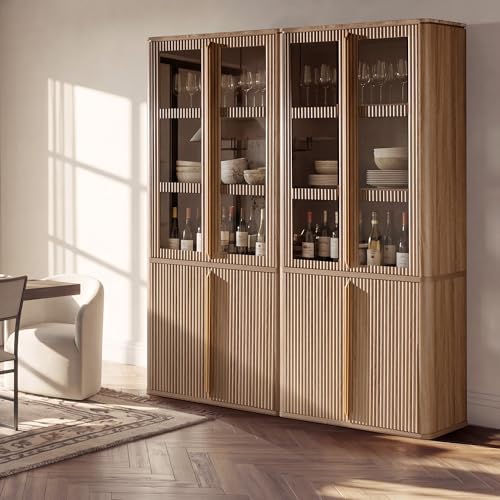
【Handmade Texture, Elevated Design】 This 77" tall Pantry Cabinet combines handcrafted wave panels, softly curved edges, and a marble-inspired top surface to create a cleaner, more elevated modern look. Unlike machine-made textures, the hand-finished wave detailing adds dimension and depth you can both see and feel. Rounded corners soften the silhouette while helping reduce bumps around everyday movement. Designed for homes that want storage to look beautiful too

ABUNDANT STORAGE: This 10 compartment daycare cubbies storage for kids has multiple wide and narrow sections providing ample space to store both big & small items. Ideal for use into any room at school, classrom, daycare, office & home

🥇【Queen Loft Bed with Desk】This loft bed with a built-in desk and a small closet,the space under the bed is a great place for you to study,work or play.Space-saving design perfect for kid’s room,dorm or guest room,or any other limited floor space.
Engaging Children in the Organization Process
Engaging children in the organization process can turn a challenging chore into an exciting adventure. Kids love to take part in age-appropriate tasks. Sorting clothes and toys can feel like a treasure hunt! Use colorful containers and fun labels as visual cues, making everything easier to spot.
Try these fun ideas:
- Turn decluttering into a game. Make it a race!
- Allow kids to help design their closet space—who doesn’t love picking colors?
- Celebrate little wins with stickers or rewards.
These activities encourage responsibility, creativity, and ownership. Let’s be honest, organizing is a skill everyone can improve—like learning to ride a bike! With your support, kids can master organization and enjoy the process too.
Adapting Storage Solutions Over Time
As children grow, their storage needs can change dramatically—much like the mysterious shift of their favorite toys when they’re under the couch. Parents can cleverly adapt storage solutions to keep up with changing styles and evolving interests. First, categorize current belongings: clothes, toys, and gear.
Next, consider future needs like school supplies or hobbies.
Create flexible spaces using adjustable shelves, modular bins, and multipurpose storage areas—these can adapt as items change.
For seasonal gear, dedicate spots for each weather type.
Every few months, reassess the setup; swap out items, making older ones accessible yet out of sight.
This approach not only keeps closets organized but encourages kids to take ownership—no one likes the ‘what’s that smell?’ mystery!
Frequently Asked Questions
How Can I Involve My Child in the Organization Process?
To involve a child in the organization process, parents can facilitate collaborative sorting, allowing them to participate in playful decision making about their belongings. This builds responsibility and fosters engaged learning in organizing habits.
What Are the Best Materials for Kid-Friendly Closet Systems?
The best materials for kid-friendly closet systems include versatile fabric choices and durable finishes. These selections guarantee safety and practicality, while also supporting a playful environment that adapts and grows alongside a child’s ever-changing needs.
How Often Should I Reassess the Closet Organization System?
Reassessing the closet organization system should occur at least twice a year, typically during seasonal changes. Regular evaluations account for growth spurts, enabling timely adjustments to clothing and storage needs for ideal organization.
What Age Is Appropriate to Start Encouraging Independence in Organizing?
Ironically, while many struggle to manage personal organization, toddlers can begin cultivating autonomy at age one. By preschool, children thrive with organization skills, fostering independence that ironically outshines many adults’ chaotic habits in organizing spaces.
How Can I Make Closet Organization Fun for My Child?
Making closet organization fun involves using colorful hangers and interactive labels to engage children. Incorporating games, challenges, and rewards can transform tidying up into an enjoyable activity, fostering enthusiasm and independence in managing their space.