As an Amazon Associate, we earn from qualifying purchases. Some links on this site are affiliate links at no extra cost to you. Our recommendations are based on thorough research and editorial judgment.


Microfiber Vs Cotton Mop Heads: Which Cleans Better

When comparing microfiber and cotton mop heads, microfiber clearly wins the cleaning game. It absorbs more, tackling up to 500 square feet per wash, while cotton only manages about 100. Microfiber’s durability is impressive too—it lasts for hundreds of washes, while cotton frays quickly, costing more over time. Plus, it’s lighter, making it easier on your back. So, if you’re looking for effective cleaning with fewer fusses—trust me, you’ll want to stick around for more tips!
Key Takeaways
- Microfiber mops absorb up to six times their weight, significantly outperforming cotton in liquid retention and cleaning efficiency.
- With the ability to clean up to 500 square feet per wash, microfiber mops cover larger areas than cotton counterparts, which only handle 100 square feet.
- Microfiber effectively removes over 99% of bacteria with just water, minimizing the need for chemical cleaners compared to cotton mops.
- Microfiber mop heads last through hundreds of washes, whereas cotton mops require frequent replacements after about 20 washes, offering better durability.
- Microfiber mops are lighter and ergonomically designed, reducing user strain and fatigue while facilitating quicker cleaning times.
Cleaning Efficiency Comparison
Cleaning efficiency often feels like a race, doesn’t it? When pitting microfiber against cotton mops, the competition is fierce! Microfiber mops absorb up to six times their weight, tackling up to 500 square feet per wash. That’s a game-changer compared to cotton’s measly 100. With their dense fibers, microfiber needs fewer wrings and water changes, speeding up the process.
Now, let’s chat surface compatibility. Microfiber shines on smooth floors—it glides effortlessly! However, cotton doesn’t back down on uneven surfaces, reaching those pesky grout lines.
Many microfiber models can remove over 99% of bacteria using just water, eliminating the need for harsh chemicals. For hands-free operation and enhanced efficiency, dual-compartment bucket systems keep clean and dirty water separate throughout the mopping process.
Here’s a quick summary:
- Microfiber: Fast, furious, and eco-friendly!
- Cotton: Great for tough spots but slower.
Ultimately, choosing between them depends on your cleaning needs and techniques. Happy mopping!
Recommended Products

[CLEAN LIKE A PRO] — Transform your cleaning regimen by eliminating the need for a vacuum and cutting your cleaning time in half! Our microfiber dust mop heads effortlessly gather dust, dirt, and debris, extending the lifespan of hardwood, laminate, and tile floors.

Smoothly and efficiently applies floor finishes and protectors to floors and is backed by a satisfaction guarantee to replace product within two years for comparable product.

ULTIMATE FLOOR CLEANER FLOOR MOP PADS: This mop head will leave your home sparkling clean and will give you all that you need to clean all floor types. Ideal for cleaning dirt, dust, pet hair and also reaches into crevices, baseboards and corners.
Durability and Longevity of Mop Heads
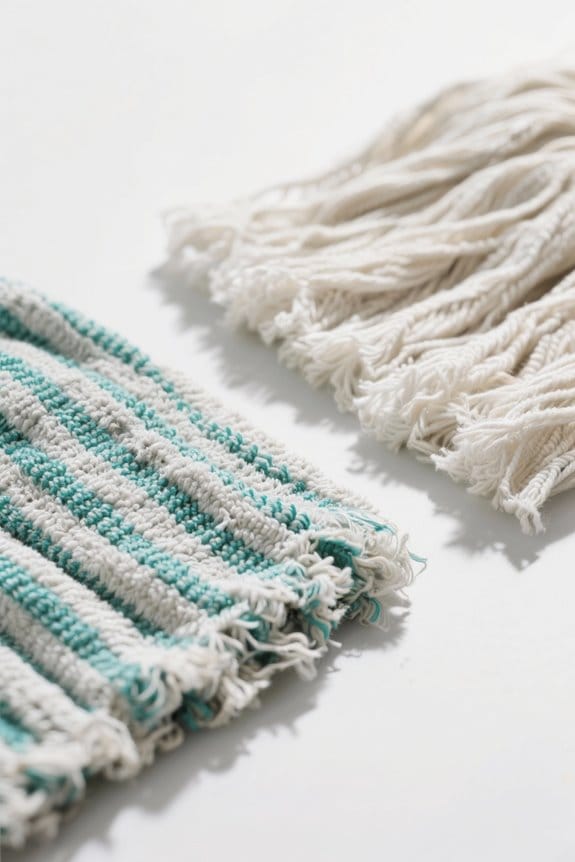
The choice of a mop head can greatly affect cleaning routines, extending far beyond just efficiency. When considering durability, mop materials play a critical role. Microfiber mop heads, made from synthetic fibers like polyester, can last through hundreds of washes—while cotton mops only survive about 20 trips through the laundry. This means less frequent replacements, saving time and money, especially for those high-traffic areas.
Also, microfiber dries quickly, which helps fend off unwanted bacteria and odors. In contrast, cotton’s tendency to fray can leave you feeling like you’re holding onto a mop relic. So, think about cleaning frequency—investing in a microfiber mop can make your life easier and keep those nasty germs at bay, all while being eco-friendly! Similar to durable, non-toxic materials used in storage solutions, quality mop heads should resist cracking and maintain their structural integrity through repeated use and cleaning cycles.
Ergonomics and User Comfort

When choosing a mop head, considering ergonomics is key to a comfortable cleaning experience. Microfiber mops are light and easy to maneuver—about 80% lighter than cotton ones! This means less user strain, making cleaning feel more like a breeze than a workout session. Here’s why they shine:
- Ergonomic designs: Many come with adjustable, comfy handles that reduce back strain.
- Handling techniques: Flat mop designs empower smooth, wide strokes—goodbye aching arms!
- Modular systems: Built-in wringers cut down on manual wringing, reducing repetitive strain.
With microfiber, users report less fatigue and fewer injuries. Cotton mops? They often lead to a hefty muscle strain with excessive wringing. Similarly, collapsible laundry baskets with comfort grip handles enhance portability and reduce strain during household chores. So, embrace comfort, and let those microfiber mops work their magic!
Environmental Impact of Cleaning Products

Shifting focus from the comfort of mopping to the bigger picture, it’s easy to overlook what’s in those bottles under the sink. Many cleaning products can harm our environment. Conventional formulations use heavy plastic packaging and chemicals that make folks shudder. But don’t fret! There are eco-friendly alternatives.
Here’s why it matters:
- Conventional chemicals often pollute waterways, harming aquatic life.
- Many products aren’t biodegradable, creating more waste.
- Switching to greener options reduces health risks for you and the planet.
Consider products with minimal packaging or refill options—trust one study that says 75% of people are concerned about environmental sustainability. Proper storage using durable, shatter-resistant plastic organizers can help you keep track of eco-friendly cleaning supplies and reduce waste from duplicate purchases.
Cost Analysis: Upfront vs. Long-Term Savings
Choosing between cotton and microfiber mop heads comes down to dollars and sense. Cotton mop heads have lower upfront costs—around $4.81 each. However, they require frequent replacements, which can add up. Microfiber, on the other hand, may cost about $4.99 or more upfront but lasts much longer—up to 500 washes! This durability means fewer replacements over time, leading to significant long-term savings.
Consider these points:
- Cotton needs more cleaning solution, raising chemical costs.
- Microfiber is more efficient, covering more ground faster.
- Labor costs drop when cleaning is quicker and less strenuous.
While cotton might be easier on your wallet today, microfiber can save you bucks down the road! Just as recycled plastic options in kitchen organization products offer eco-friendly value, microfiber represents a smart investment that pays dividends through extended use. Who knew cleaning could become a savvy investment?
Recommended Products

Kit Included: 1 Orbital Floor Buffer & Scrubber Machine, 2 Polishing/ Stripping Pads, 3 Scrub Brushes, 1 Microfiber Carpet Bonnet, 1 Pad Holder

Central vacuum accessories are designed to improve the performance and versatility of your central vacuum system, having the right accessory kit can improve the overall performance of your central vacuum system and make it more convenient to use.

ULTIMATE FLOOR CLEANER FLOOR MOP PADS: This mop head will leave your home sparkling clean and will give you all that you need to clean all floor types. Ideal for cleaning dirt, dust, pet hair and also reaches into crevices, baseboards and corners.
Specialized Use Cases for Microfiber and Cotton
How can one decide between microfiber and cotton mop heads for different surfaces? Both have specialized cleaning abilities but shine in different areas.
- Hardwood Floors: Microfiber is gentle and picks up fine dust without scratching. Cotton? Often too wet, risking wood damage.
- Tile and Grout: Microfiber’s dense fibers tackle dirt effectively—goodbye, grime! Cotton might just push dirt around if it’s not careful.
- Dust and Debris: Go for microfiber—those fibers attract dust like a magnet! Cotton mops will just spread it.
- Commercial Spaces: Microfiber mops are tough and durable. Cotton mops can wear out quickly, making it a losing game.
In short, for targeted surfaces, microfiber tends to be the superhero while cotton plays sidekick—when it behaves! For maintaining your mop heads, use a mild soap solution and clean regularly to ensure optimal performance and longevity.
Recommended Products

MULTI-PURPOSE HARD FLOOR CLEANER MACHINE: Sand, refinish, strip, scrub, wax and polish, as well as deep clean your carpets with the Oreck Orbiter All-In-One Hard Floor Cleaner Machine, effective on all flooring types.

4500Pa Ultra-Strong Suction:Equipped with a high-performance brushless motor, the Yigars Y300 delivers up to 4500Pa of intense suction. Whether it's stubborn pet hair, fine dust, or spilled cereal, it tackles messes effortlessly on hardwoods, tiles, and low-pile carpets, ensuring a spotless home with every pass.The anti-tangle design keeps pet hair from clogging the system, so you don’t have to constantly clean the brush. More cleaning, less hassle

20" x 12" base, telescoping handle, 360 degree rotation, velcro bottom
Effectiveness in Hygiene-Critical Areas
In the world of cleaning, especially in hygiene-critical areas like hospitals, the choice of mop head can make a huge difference. Microfiber mop heads shine when it comes to meeting high hygiene standards. They can remove up to 95% of microbes, a significant step up from cotton’s 68%. Imagine that! These nifty mop heads can even zap 99.999% of bacteria like MRSA and E. coli. Plus, they prevent cross-contamination, thanks to disposable options—the ideal choice for keeping germs at bay.
With their larger surface area, microfiber traps dirt and pathogens expertly. Facilities using microfiber report fewer healthcare-associated infections. So, if cleaner surfaces and safer environments are your goal, microfiber is the star of the cleaning show. Just as you would use non-slip pads to keep items securely in place during storage, microfiber mop heads provide reliable traction and stability during cleaning to prevent slips and maintain control.
Maintenance and Care Requirements
Maintaining mop heads, whether microfiber or cotton, is key to keeping cleaning routines efficient and effective. Microfiber mop heads last 150–500 washes, a true marathon runner, while cotton only makes it 15–30 washes—definitely a sprinter! To extend mop head lifespan, follow these tips:
- Wash with warm water and mild detergent.
- Avoid fabric softeners, especially for microfiber!
- Inspect regularly for signs of wear, like fraying or loss of absorbency.
After washing, dry fully in a well-ventilated area—nobody likes mildew! Microfiber dries faster and prevents bacteria—score! Both types thrive in a dry, sun-free zone. Just as over-the-door organizers maximize vertical storage space with strategic arrangement, proper mop head storage in a well-ventilated area optimizes longevity and performance. Following these care tips boosts performance and keeps cleaning routines fresh—kind of like a spruced-up mop dance party!
Recommended Products

✔ [DURABLE AND MACHINE WASHABLE] — Our 36-inch Microfiber Wet Mop Pads are built to withstand countless wash cycles without losing absorbency. After rigorous testing spanning over 150 washes, these pads retained 100% of their initial absorbency, ensuring enduring performance.

Triple power - the mop is made of special microfibre and viscose: ultra absorbent, power scrub and power pick-up strips for stubborn stains on tiles and stone floors

Package Includes: 40 pack large microfiber tube mop heads, enough quantity to meet your daily use and replacement needs
Choosing the Right Mop for Your Needs
Choosing the right mop can feel like a high-stakes game, especially with so many options available. Each mop head type has its perks!
Consider these key points:
- Cleaning Surface: Microfiber excels on smooth floors, covering 400-500 square feet efficiently. Cotton mops are better for rough areas, tackling big spills well.
- Durability: Microfiber lasts up to 1,000 washes—a true trooper! Cotton? Not so much—it’s more like a one-hit wonder.
- Weight: Microfiber mops are lightweight, making them easy to maneuver—less strain equals happier cleaning days!
- Material: Look for waterproof and rust-proof materials in your mop accessories to ensure they withstand humid bathroom environments and last longer.
Recommended Products

【Unleash the Power of High-Temperature Steam Cleaning】 ✅ Experience a new era of cleaning with the 1200W steam mop that transforms water into high-pressure steam in just 15 seconds. And each time filling up the water, steam cleaner provides you with up to 30 minutes high-temperature cleaning runtime.

【Powerful High-Temperature Steam Cleaner Mop】 Equipped with a 1200W rapid-heating system, this steam mop generates high-pressure steam in just 15 seconds to dissolve dirt, grease, and stubborn stains effortlessly. Enjoy up to 30 minutes of continuous cleaning per fill for a thorough clean.

🏆 Award Winning Performance: The Euroflex Vapour M2R steam mop is currently top-rated by Consumer Reports earning the “CR Recommended” seal of excellence and one of the best steam mops on the market
Frequently Asked Questions
Can Microfiber Mop Heads Be Used on All Floor Types?
Microfiber mop heads offer significant cleaning benefits and are compatible with various floor types, including hardwood, tile, and vinyl. However, they should not be used on unfinished concrete or heavily waxed surfaces to prevent damage.
How Do I Prevent Odor in Mop Heads?
Studies show that over 60% of mop heads harbor bacteria if not maintained. Implementing effective mop maintenance tips and utilizing proper mop storage solutions can greatly reduce odors, ensuring a fresher, cleaner environment after each use.
Are There Specific Brands Recommended for Microfiber Mops?
Several microfiber brands are recommended for mop efficiency, including O-Cedar for build quality, Mr. Sega for versatility, and Microfiber Wholesale, known for high customer satisfaction and professional-grade products based on extensive reviews.
Can Cotton Mops Be Effectively Disinfected?
In the intricate dance of cleanliness, cotton mops can achieve a degree of disinfection, yet their absorbency may falter. Their cleaning effectiveness often lags behind, calling for diligent laundering to maintain peak performance against microbial foes.
How Often Should I Replace My Mop Head?
Mop heads should be replaced based on cleaning frequency and overall mop maintenance. Typically, microfiber heads last up to a year, while cotton heads may only endure 2 to 6 months before needing replacement.


