As an Amazon Associate, we earn from qualifying purchases. Some links on this site are affiliate links at no extra cost to you. Our recommendations are based on thorough research and editorial judgment.


The Four-Box Method: Your Secret to Stress-Free Decluttering

The Four-Box Method makes decluttering simple and less scary. Think of four boxes: Keep, Donate/Sell, Discard, and Store. Start small—15 to 30 minutes is enough. Pick a drawer or closet, and tackle it! Use clear labels to avoid your inner hoarder taking over. You’ll feel lighter and more organized as you decide what to keep and what to let go. Plus, it’s oddly satisfying. Curious about how it compares to other methods?
Key Takeaways
- The Four-Box Method categorizes items into Keep, Donate/Sell, Discard, and Storage for systematic decluttering.
- Setting up four labeled boxes makes the decluttering process straightforward and visually organized.
- Focusing on one area at a time minimizes overwhelm and encourages consistent progress.
- Regularly evaluating items based on joy and usage helps make informed decisions.
- Addressing emotional attachments gradually leads to a clearer mindset for letting go of belongings.
Understanding the Four-Box Method
Decluttering can feel like climbing a mountain—daunting at first, but totally doable with the right tools. Enter the four-box method, a favorite for those embracing a minimalist mindset. This approach follows simple organizational principles that help make decisions easier.
Here’s how it works:
- Keep: Items you love and use.
- Give away/Sell: Things you no longer need.
- Throw away: Broken or unusable stuff.
- Store: Seasonal or rarely used items.
No special apps or fancy tools are needed—just four labeled boxes! The method’s charm lies in its accessibility; anyone can use it. With regular practice, decluttering becomes less of a chore and more of a fulfilling habit—like exercising, but only for your living space! Once you’ve sorted through your belongings, consider using drawer organizers to maintain the tidiness you’ve achieved and keep items easily accessible.
Recommended Products

【Bed Frame with 47" Headboard】 The high headboard of this queen bed frame with storage serves as a focal point, offering a sense of grandeur and sophistication to any bedroom décor; It provides excellent support while you relax, read, or watch TV in queen bed

Luxurious Comfort: This king bed frame with headboard cradles you in supreme relaxation! Featuring a cloud-like velvet upholstered headboard filled with high-density foam, banishing neck strain forever. Perfect for late-night novels or lazy Sunday movies

Effortless Organization: Stay clutter-free and organized with 36 spacious compartments, allowing you to neatly sort and store literature, paper, documents or mail; Ideal solution for a classroom mailbox or cubbies for students
The Purpose of Each Box

Using the four-box method makes organizing feel more manageable, breaking down clutter into bite-sized pieces. Each box category serves a clear purpose, guiding decision making.
- Box 1: Keep: Retain essential items—think daily favorites! Sentimental treasures belong here too.
- Box 2: Donate/Sell: Good-condition items that could help others find a new home or some cash—cha-ching!
- Box 3: Discard: This is for the sad stuff—broken or expired items. Outdated tech? Gone!
- Box 4: Storage: Perfect for seasonal things. Avoid hoarding, though!
With this system, stress reduces immensely. Plus, the visual aid of boxes tracks progress, making decluttering less overwhelming. For items you’re keeping, consider using cabinet door organizers to maximize your storage space and maintain easy access to frequently used belongings. Embrace the four-box method to simplify your space and life—bonus points for fun along the way!
Recommended Products

Included: (6) Maple Solid bottom baskets, (1) Frame, (1) 200 lb. slide system, (2) Door-Mount brackets, hardware

Included: (1) Chrome pantry with (6) baskets and mounting hardware

Included: (5) Maple Solid bottom baskets, (1) Frame, (1) 200 lb. slide system, (2) Door-Mount brackets, hardware
Benefits of the Four-Box Method

Organization brings a sense of calm and tranquility that many crave. The Four-Box Method offers numerous long-term benefits and practical advantages for anyone looking to declutter. First, it boosts productivity by making items easier to find. Second, it reduces overwhelm—no one wants to feel like a clutter monster’s next meal, right?
Additionally, this method simplifies decision-making by categorizing belongings.
Here’s what you get:
- Increased space—hello, long-lost floor!
- Enhanced safety—fewer tripping hazards than a toddler’s toy land.
- Improved mental health—clutter-free = stress-free.
And, the best part? You train yourself for long-term maintenance. With clear boxes, you’ll naturally avoid future clutter and create an adaptable space that suits your needs. Once you’ve sorted through your items, consider using adjustable dividers in your storage areas to maintain organization and accommodate items of various sizes. It’s a win-win!
Recommended Products
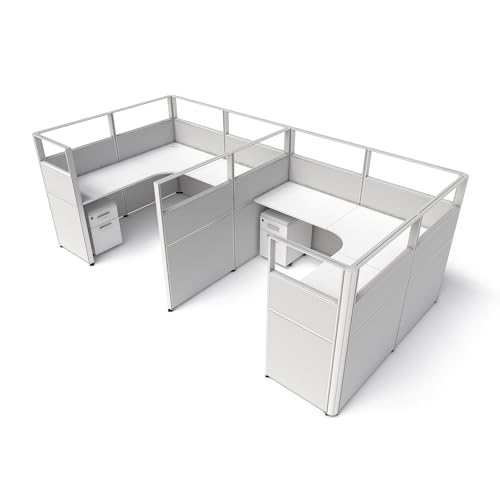
Customizable Layouts: Compact design maximizes floor space, providing a functional workstation without crowding your office or home office area with 7 different cubicle layouts.

【Dual-Person Workspace with Privacy Panels】This workstation creates an efficient two-person setup featuring tall privacy dividers that reduce distractions and enhance focus—ideal for modern office cubicle layouts and collaborative environments.

WALL-MOUNTED PARTITION: This Wall-Mountable version of the Room Divider 360 Partition is perfect to create space for numerous functions. It forms workplace areas in offices, or any situation that would require consistent use of the Room Divider 360.
Step-by-Step Process for Decluttering

Once space is cleared and benefits understood, the next step can feel like a mountain to climb—but it doesn’t have to be! Start small, focusing on one spot, like a drawer. Set up four boxes: “Keep,” “Donate,” “Trash,” and maybe a “Storage” box.
Use clear labels—sticky notes or markers work wonders!
- Spend 15 to 30 minutes on each session; timers are your friend!
- Ask yourself: Has this item brought joy or been used in the last year?
Track your steps—clutter control is all about progress! Once you’ve sorted through your items, consider using drawer organizers with customizable compartments to maintain order and prevent future chaos.
Recommended Products

FIREPROOF & IMPACT TESTED FOR MAXIMUM SAFETY Fireproof Rated 350 1-hour for documents and paper, tested for fire at 1700 degrees Fahrenheit and explosion tested at 2000 degrees Fahrenheit. Impact Rated. The impact test includes dropping the cabinet 30 feet onto concrete rubble, then reheating in the fire.

STRONG SECURITY & LCD TOUCH PANEL - Cheopz safe watch winder features the solid steel construction with 18mm explosion-proof glass window, dual locking bolts&a pry-resistant hinge bar, detector alarm system, pre-drilled holes for wall/floor mounting and LCD display touch panel on the door.

Emotional Aspects of Letting Go

Letting go of possessions can be a real challenge, especially when emotional attachments are involved. Memories tied to items create strong connections that make decluttering tough. For many, letting go feels like losing a part of themselves—cue the guilt!
Here are some common emotional barriers:
- Gifts: You feel obligated to keep them, even if unused.
- Inherited items: Memories of loved ones can trigger sadness.
- Nostalgia: Some items remind us of cherished times, making them hard to part with.
Clutter anxiety can arise from these emotional ties, creating a cycle of stress. However, facing these feelings gradually helps. Releasing items can lead to a clearer mind—and that’s a win-win! Multi-purpose organizers with designated spaces can help ease the transition by giving remaining meaningful items a proper home. Just remember, it’s okay to breathe, pause, and let go.
Comparing the Four-Box Method to Other Approaches
While tackling clutter can feel like an uphill battle, the Four-Box Method stands out among various decluttering approaches for its straightforward simplicity. Unlike the KonMari method, which emphasizes a Minimalist Mindset and deep emotional reflections on items, the Four-Box Method offers practicality with four distinct Clutter Categories: Keep, Donate/Sell, Trash, and Storage. This structured approach keeps decisions quick and uncomplicated—no need for an emotional breakdown!
- It adapts well, whether your space is a cozy apartment or a sprawling house.
- Are you unsure? Toss that item in Storage for later contemplation—it’s a safe harbor!
For items you decide to keep, consider using purse organizer inserts with removable dividers to maintain order and prevent your bags from losing their shape over time.
Recommended Products

EXTRA COMFORT: The bag features an extra wide opening to hold your camera with accessories attached, making access to your camera equipment easier and quicker

Patented 2-in-1 Detachable Wheel and Handle System

Well organized top zip compartment provides quick access to main section with separate file divider
Frequently Asked Questions
Can I Modify the Box Categories to Fit My Needs?
Yes, individuals can modify box categories for customized needs. Flexible sorting options enhance the decluttering process, allowing for tailored decisions, improved organization, and reduced stress by reflecting personal preferences and specific clutter management goals.
How Often Should I Declutter Using the Four-Box Method?
Regular decluttering sessions can be scheduled monthly for thorough organization, while seasonal tips suggest adjusting frequency based on changing needs. This approach maintains a clutter-free environment and adapts to personal preferences and events.
What Should I Do With Items After Sorting Them?
After sorting, one should consider donation guidelines for viable items, and explore recycling options for materials no longer needed. This guarantees a responsible shift from clutter to clarity, bringing purpose and sustainability into the process.
Is There a Best Time of Year to Declutter?
The best time of year to declutter often aligns with spring renewal and autumn preparation. Seasonal decluttering tips and holiday decluttering strategies can maximize efficiency, creating streamlined spaces before busy schedules and festivities commence.
Can I Involve Family Members in This Process?
Yes, involving family members in the decluttering process promotes family engagement and shared responsibility. Collaborative participation enhances enjoyment, fosters teamwork, and helps maintain the organized space, ensuring everyone feels a sense of ownership and commitment.